|
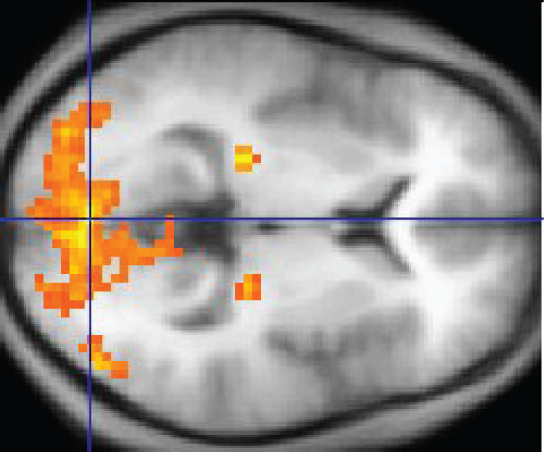
Functional Divisions of the Nervous System The nervous system can also be divided on the basis of its functions, but anatomical divisions and functional divisions are different. The CNS and the PNS both contribute to the same functions, but those functions can be attributed to different regions of the brain (such as the cerebral cortex or the hypothalamus) or to different ganglia in the periphery. The problem with trying to fit functional differences into anatomical divisions is that sometimes the same structure can be part of several functions. For example, the optic nerve carries signals from the retina that are either used for the conscious perception of visual stimuli, which takes place in the cerebral cortex, or for the reflexive responses of smooth muscle tissue that are processed through the hypothalamus. There are two ways to consider how the nervous system is divided functionally. First, the basic functions of the nervous system are sensation, integration, and response. Secondly, control of the body can be somatic or autonomic—divisions that are largely defined by the structures that are involved in the response. There is also a region of the peripheral nervous system that is called the enteric nervous system that is responsible for a specific set of the functions within the realm of autonomic control related to gastrointestinal functions. Basic Functions The nervous system is involved in receiving information about the environment around us (sensation) and generating responses to that information (motor responses). The nervous system can be divided into regions that are responsible for sensation (sensory functions) and for the response (motor functions). But there is a third function that needs to be included. Sensory input needs to be integrated with other sensations, as well as with memories, emotional state, or learning (cognition). Some regions of the nervous system are termed integration or association areas. The process of integration combines sensory perceptions and higher cognitive functions such as memories, learning, and emotion to produce a response. Sensation. The first major function of the nervous system is sensation—receiving information about the environment to gain input about what is happening outside the body (or, sometimes, within the body). The sensory functions of the nervous system register the presence of a change from homeostasis or a particular event in the environment, known as a stimulus (pl. stimuli). The senses we think of most are: taste, smell, vision, hearing and balance. The stimuli for taste and smell are chemical substances (molecules, compounds, ions, etc.), vision is light stimuli, hearing is the perception of sound and balance is the perception of where your head is in space. The last two rely on physical stimuli. The above senses are called special senses because they have specialized organs to sense the environment. There are actually more senses than just those, for example touch, pain and temperature sensation are perceived by the skin. These are called general senses. Special and general senses receive stimuli from the outside world and are perceived consciously, meaning that you are aware of them. This conscious sensation coming from special and general senses is called somatic sensation or somatosensation. Additional sensory stimuli might be from the internal environment (inside the body), such as the stretch of an organ wall or the concentration of certain ions in the blood or pain related to compression of nerves. These are called visceral senses and are not perceived consciously, meaning that you are not aware of them. Somatic and visceral sensory information is perceived by structures within the Peripheral Nervous System and travels towards the Central Nervous System. This inward direction is called afferent. Integration. Stimuli that are received by sensory structures are communicated to the nervous system where that information is processed. Stimuli are compared with, or integrated with, other stimuli, memories of previous stimuli, or the state of a person at a particular time. This leads to the specific response that will be generated. Seeing a baseball pitched to a batter will not automatically cause the batter to swing. The trajectory of the ball and its speed will need to be considered. Maybe the count is three balls and one strike, and the batter wants to let this pitch go by in the hope of getting a walk to first base. Or maybe the batter’s team is so far ahead, it would be fun to just swing away. Response. The nervous system produces a response on the basis of the sensory stimuli. An obvious response would be the movement of muscles, such as withdrawing a hand from a hot stove, but there are broader uses of the term. The nervous system can cause the contraction of all three types of muscle tissue. For example, skeletal muscle contracts to move the skeleton, cardiac muscle is influenced as heart rate increases during exercise, and smooth muscle contracts as the digestive system moves food along the digestive tract. Responses also include the neural control of glands in the body as well, such as the production and secretion of sweat by the eccrine and merocrine sweat glands found in the skin to lower body temperature. Thus, muscles and glands are the targets of the motor response, become active when stimulated to carry out the response. For this reason, they are called effectors. Responses can be divided into those that are voluntary or conscious (contraction of skeletal muscle) and those that are involuntary or unconscious (contraction of smooth muscles, regulation of cardiac muscle, activation of glands). Voluntary responses are governed by the somatic nervous system and involuntary responses are governed by the autonomic and enteric nervous system, which are discussed in the next section. Motor information is generated by the Central Nervous System and travels to the Peripheral Nervous System. This outward direction is also efferent. Afferent and efferent sound the same but are different. One way to remember their differences is using the acronym SAME that stands for Sensory Afferent Motor Efferent. Controlling the Body The nervous system can be divided into two parts mostly on the basis of a functional difference in responses. The somatic nervous system (SNS) is responsible for conscious perception (somatosensation) and voluntary motor responses (also called somatic responses). Voluntary motor response means the contraction of skeletal muscle, but those contractions are not always voluntary in the sense that you have to want to perform them. Some somatic motor responses are reflexes, and often happen without a conscious decision to perform them. If your friend jumps out from behind a corner and yells “Boo!” you will be startled and you might scream or leap back. You didn’t decide to do that, and you may not have wanted to give your friend a reason to laugh at your expense, but it is a reflex involving skeletal muscle contractions. Other motor responses become automatic (in other words, unconscious) as a person learns motor skills (referred to as “habit learning” or “procedural memory”). The autonomic nervous system (ANS) is responsible for involuntary control of the body, usually for the sake of homeostasis (regulation of the internal environment). Sensory input for autonomic functions can be from sensory structures tuned to external or internal environmental stimuli. The motor output extends to smooth and cardiac muscle as well as glandular tissue. The role of the autonomic system is to regulate the organ systems of the body, which usually means to control homeostasis. Sweat glands, for example, are controlled by the autonomic system. When you are hot, sweating helps cool your body down. That is a homeostatic mechanism. But when you are nervous, you might start sweating also. That is not homeostatic, it is the physiological response to an emotional state. There is another division of the nervous system that describes functional responses. The enteric nervous system (ENS) is responsible for controlling the smooth muscle and glandular tissue in your digestive system. It is a large part of the PNS, and is not dependent on the CNS. It is sometimes valid, however, to consider the enteric system to be a part of the autonomic system because the neural structures that make up the enteric system are a component of the autonomic output that regulates digestion. There are some differences between the two, but for our purposes here there will be a good bit of overlap. See Table \(\PageIndex{2}\) for a schematic representation of the different divisions based on their basic functions and control mechanisms. Table \(\PageIndex{2}\): Basic functions of Somatic, Autonomic and Enteric Divisions of the Nervous System. The basic functions of the nervous system are sensation, integration and motor response (top row). These functions are carried out by all divisions of the nervous system (left column) through different neurons, anatomical regions and targets. What differentiates the somatic nervous system from the other two divisions is the ability to perceive and respond to stimuli at the conscious level, while the autonomic and enteric divisions are unconscious. (Table credit: Chiara Mazzasette)Sensation Integration Motor Response Somatic Conscious perception of environmental changes (light, sounds, molecules in food, movement, temperature, touch, etc) through somatic sensory neurons of PNS Information processed in brain and spinal cord (CNS) Voluntary and reflex response via skeletal muscles Autonomic Unconscious perception of external or internal changes (light, molecules, organ stretch, etc) through visceral sensory neurons in both CNS and PNS Information processed in brain (particularly hypothalamus and brainstem) and spinal cord (CNS) Involuntary movement of cardiac muscle, smooth muscle, glands Enteric Unconscious perception of internal changes (molecules, movement, stretch) within the gastrointestinal tract through visceral sensory neurons in gastrointestinal tract Information processed within the gastrointestinal tract (PNS) Involuntary movement of smooth muscle and glands of digestive system Interactive Link Creeping Weakness Read the about a woman that notices that her daughter is having trouble walking up the stairs. This leads to the discovery of a hereditary condition that affects the brain and spinal cord. The electromyography and MRI tests indicated deficiencies in the spinal cord and cerebellum (a region of the brain), both of which are responsible for controlling coordinated movements. To what functional division of the nervous system would these structures belong? AnswerAnswer: They are part of the somatic nervous system, which is responsible for generating voluntary movements such as walking or climbing the stairs. EVERYDAY CONNECTION: How Much of Your Brain Do You Use? Have you ever heard the claim that humans only use 10 percent of their brains? Maybe you have seen an advertisement on a website saying that there is a secret to unlocking the full potential of your mind—as if there were 90 percent of your brain sitting idle, just waiting for you to use it. If you see an ad like that, don’t click. It isn’t true. An easy way to see how much of the brain a person uses is to take measurements of brain activity while performing a task. An example of this kind of measurement is functional magnetic resonance imaging (fMRI), which generates a map of the most active areas and can be generated and presented in three dimensions (Figure \(\PageIndex{4}\)). This procedure is different from the standard MRI technique because it is measuring changes in the tissue in time with an experimental condition or event.
Figure \(\PageIndex{4}\): Functional Magnetic Resonance Imaging (fMRI) map. This imaging represents a transverse plane of the brain with the posterior side on the left and anterior side on the right. The orange areas represent highly active regions. In this particular example, the fMRI map shows activation of the visual cortex in response to visual stimuli. (Image credit: "1206 FMRI" by OpenStax is licensed under CC BY 4.0) The underlying assumption is that active nervous tissue will have greater blood flow. By having the subject perform a visual task, activity all over the brain can be measured. Consider this possible experiment: the subject is told to look at a screen with a black dot in the middle (a fixation point). A photograph of a face is projected on the screen away from the center. The subject has to look at the photograph and decipher what it is. The subject has been instructed to push a button if the photograph is of someone they recognize. The photograph might be of a celebrity, so the subject would press the button, or it might be of a random person unknown to the subject, so the subject would not press the button. In this task, visual sensory areas would be active, integrating areas would be active, motor areas responsible for moving the eyes would be active, and motor areas for pressing the button with a finger would be active. Those areas are distributed all around the brain and the fMRI images would show activity in more than just 10 percent of the brain (some evidence suggests that about 80 percent of the brain is using energy—based on blood flow to the tissue—during well-defined tasks similar to the one suggested above). This task does not even include all of the functions the brain performs. There is no language response, the body is mostly lying still in the MRI machine, and it does not consider the autonomic functions that would be ongoing in the background. (责任编辑:) |